

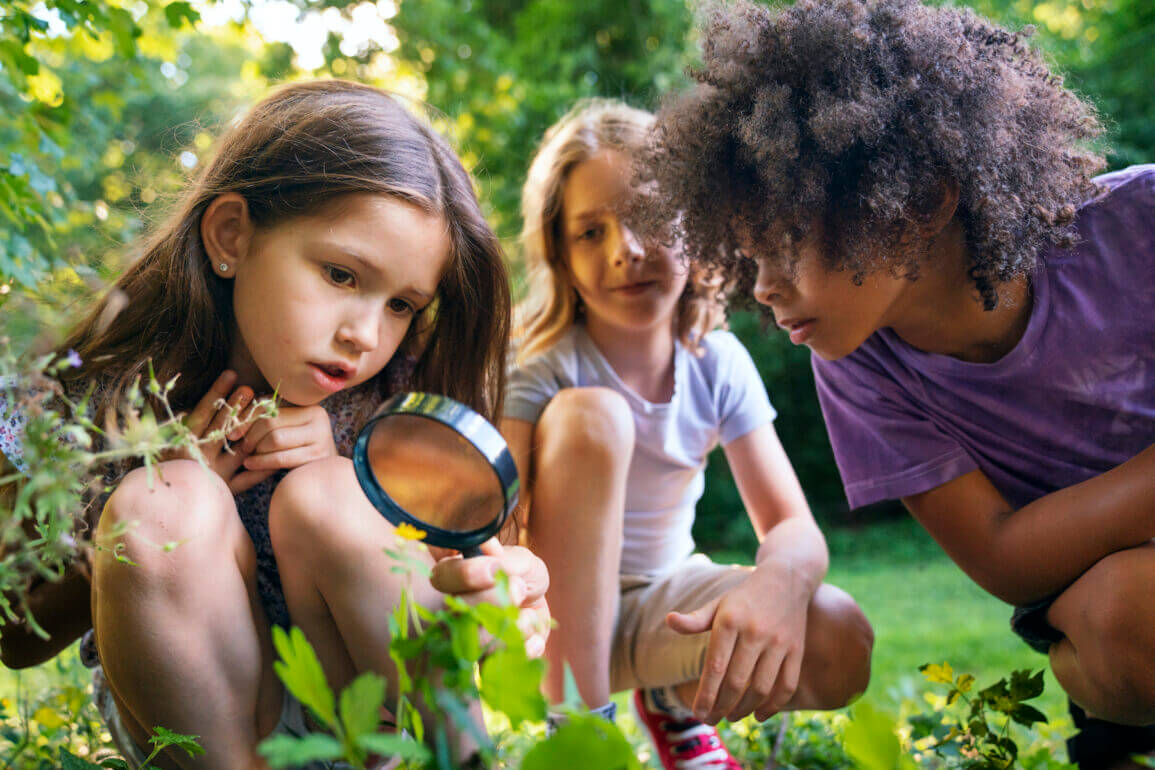
Each year on April 22nd we celebrate Earth Day to help raise awareness about the importance of being good stewards of our planet and how integral nature is in all our lives. It’s a great opportunity to learn how to reduce pollution, mitigate climate change, and to participate in programs like recycling, planting trees, neighborhood clean ups and so much more!
Earth Day got its start in 1970 when Wisconsin Senator Gaylord Nelson proposed a day to acknowledge the state of our planet and try to make it a healthier place for us all to live. In its first year, over 20 million people nationwide rallied for Nelson’s cause! Since 1990, Earth Day has been celebrated worldwide with people around the globe conserving, protecting, and caring for our planet.
Keep scrolling for thought-provoking videos, interactives, crafts and games to celebrate Earth Day. Then, keep the fun going with Learn Along Bingo sheets full of printable activities and everyday learning ideas for children grades Pre-K to 2. And remember – anyone, anywhere can be a Planet Protector. Our choices and actions can positively impact the land, water, air, and all living things.
Jump to article sections:
Earth Day & Environmentalism
Check out these articles and videos to learn more about Earth Day, environmental stewardship, and how technology can play a part in protecting our planet!
How to Raise Environmentally Responsible Kids
Grades PreK-3
Talking with your child about the environment and ways to help take care of our planet can help your child establish eco-friendly habits that make a difference!
Climate Solutions Success Stories | The Earthshot Report
Grades 6-8
Agrivoltaics, electric motorcycles, and Earth stewardship are just three solutions for improving humanity’s sustainable growth on Earth. The organizations behind these solutions were awarded Earthshot Prizes for their contributions to environmental conservation and regenerative economics. Explore these three case studies and then simulate some of the science and technology principles with engaging classroom activities.
The Environmental Movement and the First Earth Day
Grades 6-12
Learn about the first Earth Day in this video from the American Masters film, A Fierce Green Fire. Interest in conservation increased during the 1960s as people became more aware of pollution, endangered species, and Earth’s unique characteristics. The first official Earth Day was held in April 1970 and included large demonstrations across the country in support of the environment.
Henry David Thoreau and the Importance of Observing and Describing Nature
Grades 6-12
Discover the scientific side of Henry David Thoreau, including his records of natural events that have helped modern ecologists and climatologists discover ecosystem changes across the Greater Boston region. Watch three videos to learn about Thoreau’s nature journeys, spurred by both his philosophical and academic influences, and then reflect on your own connections to nature by observing and recording field notes in a real-world activity.
A Wild Idea: The Birth of the Adirondack Park Agency collection
Grades 6-12
A Wild Idea: The Birth of the Adirondack Park Agency examines the early origins of New York’s Adirondack Park and the creation of the Adirondack Park Agency (APA). The Adirondack Park is larger than Yellowstone, Yosemite, Glacier, Grand Canyon, and Great Smoky Mountains National Parks combined. Using archival footage, the film examines the challenges to the creation of the APA and its role in the preservation and management of the Adirondack Park, one of the most ambitious land-use planning conservation efforts ever undertaken.
Activities, Games, & More
Nature Sights & Sounds Game | Elinor Wonders Why
Grades PreK-K
Immerse yourself in nature with this game! Go to the desert, sit by a river, or choose a different spot. Then add elements to the scene to create your own outdoor oasis.
Create Earth Day Place Portraits
Grades PreK-3
Use recyclable materials to make a favorite place portrait in honor of Earth Day.
Make a Nature Journal to Observe Animals
Grades K-5
Observing wildlife is a wonderful way for children to practice patience and develop skills in noticing details. An animal observation journal is a great way to keep a record of the amazing animals you observe where you live and for sharing those observations with others.
Nutrient Pollution Management Simulator
Grades 6-8
In this model watershed, large algae blooms are leading to dangerously low oxygen levels in the water. Can you make a plan to reduce nutrient pollution? Use this interactive simulator as an example of the value of models in science and engineering, and for students to test ideas on nutrient pollution reduction strategies.
Pollination and Community Action: Middle Schoolers Build a Pollinator Garden | Mountain Lake Journal
Grades 6-12
Watch as a group of middle school students get their hands dirty building a pollinator garden on school property. Follow along as they learn about the importance of pollinators, pollinator plants, and community action. Then take action of your own by building a pollinator garden in your community!
Local Ecological & Conservation Organizations
Take stewardship into your own hands! Help conserve the environment and protect wildlife with the help of these local organizations.
Lake Champlain Basin Program
The Lake Champlain Basin Program coordinates and funds efforts that benefit the Lake Champlain Basin’s water quality, fisheries, wetlands, wildlife, recreation, and cultural resources, in partnership with government agencies, private organizations, local communities, and individuals.
The Wild Center
The Wild Center is a natural history center in Tupper Lake, New York, near the center of New York State’s Adirondack Park. The experiences, exhibits and programs at The Wild Center are designed to open new ways to look into the latest discoveries made by natural scientists and their educational programming serves to engage learners of all ages in an exploration of the natural world.
AdkAction
AdkAction makes life better across the Adirondacks through partnerships and creative problem solving. Get involved with some of their initiatives like Clean Water Safe Roads, which reduces the road salt that’s contaminating our rivers, lakes, and drinking water, and The Adirondack Pollinator Project, promoting the health of pollinators in our ecosystem and providing resources to become a pollinator advocate.
The Nature Conservancy
The Nature Conservancy is a global environmental nonprofit working to create a world where people and nature can thrive. Through their work they focus on innovative solutions to climate change, protecting and restoring forest, and helping communities build resilience. The Nature Conservancy has a local chapter in New York State focused on initiatives across the Adirondacks, Central and Western New York, and the New York Metro area.
Paul Smith’s College Visitor Interpretive Center
The Paul Smith’s College Visitor Interpretive Center is dedicated to fostering connections with nature for students, local residents, and regional visitors by providing outdoor recreation opportunities, experiential education programs, and year-round art exhibitions. Explore over 25 miles of year-round trails for hiking, nature watching, lean-to camping, and more! Stop in at the center for current trail conditions and day or season passes.
Learn Along Bingo
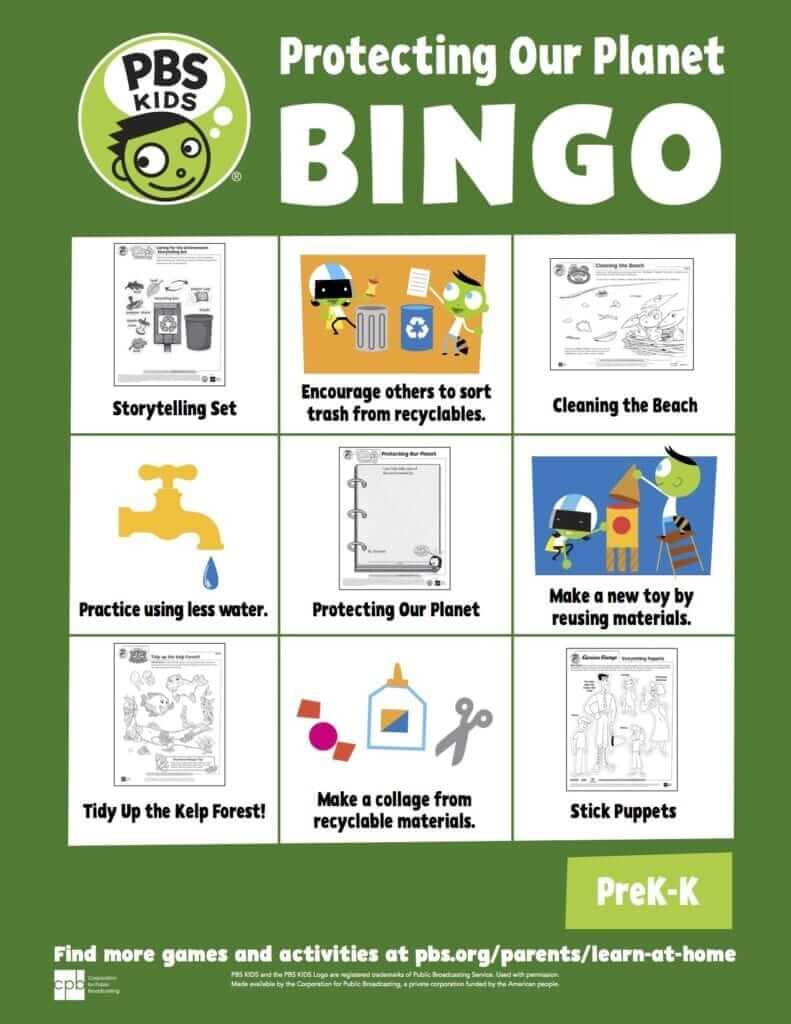
With Learn Along Bingo, children can view, explore, and play as they learn alongside their PBS KIDS friends on the PBS KIDS 24/7 channel. We hope your family will use it to inspire learning each and every day.
This time, we’re protecting our planet! Children will learn that their choices can positively impact the land, water, air, and other living things.
Grades PreK-K
Play & Learn: In this packet, there are printable activities and everyday learning ideas for you and your child to choose from. As you complete each square, mark it off to celebrate the learning!
Grades 1-2
Play & Learn: In this packet, there are printable activities and everyday learning ideas for you and your child to choose from. As you complete each square, mark it off to celebrate the learning!

For even more games and educational resources for young learners, go to the Protecting Our Planet collection on PBS KIDS for Parents.